The phrase can refer to different casino settings, while each land-based property is governed by a licence issued in its state or territory.
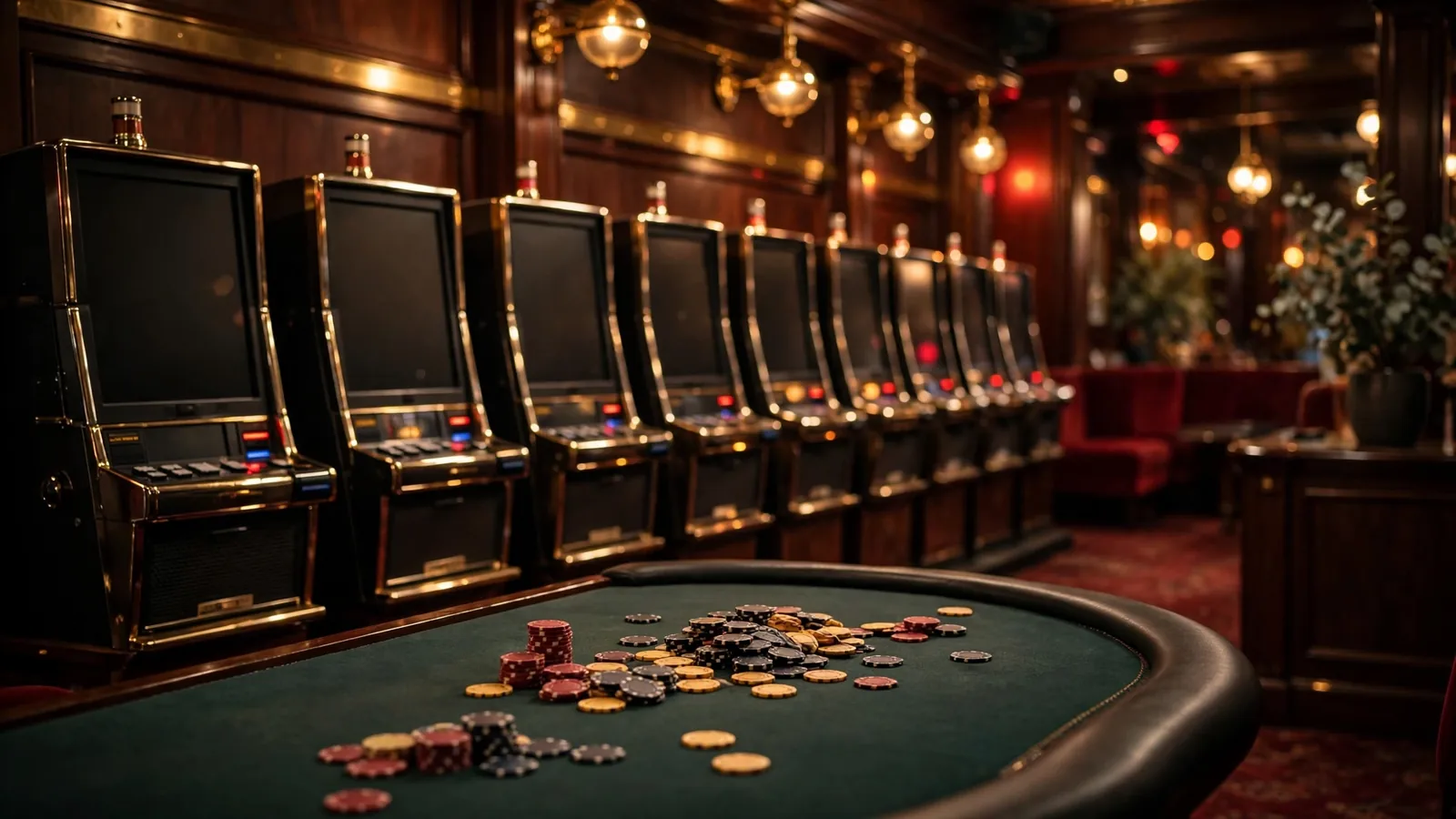
In Australia, “pokies” is a familiar informal term for gaming machines. A “pokies parlour” can therefore sound like a dedicated room or venue for those machines. In practice, the phrase is not a single national category of casino. It may be used loosely to describe a land-based casino where gaming machines are part of the offering, or simply as a way to refer to casino-style gambling. The exact meaning depends on the context in which you see it.
That distinction matters because Australia’s land-based casino industry is not regulated under one nationwide casino licence. Each casino property operates under a licence issued by the state or territory where it is located. The local jurisdiction is responsible for the framework applying to that property. As a result, the words “casino” and “pokies parlour” do not, by themselves, tell you which rules apply to a particular venue.
The national picture is substantial, but figures describing the number of casinos can change as the market and the way venues are counted change. One specialist review describes Australia as having more than 20 full-scale casinos across all eight states. Treat that as the review’s snapshot, rather than a fixed official count or a complete guide to every kind of gaming venue. A casino is also not interchangeable with every other place where gambling may be available; the venue type and the local licence matter.
Choosing a pokies parlour-style casino online in Australia calls for checking what is actually known about each option. This reference card highlights the available licensing, deposit, and payout details to help you assess the list.
SpinsUp
SpinsUp is listed with a Curacao Gaming Control Board licence, OGL/2023/174/0082, held by Dama N.V.
WinSpirit Casino
WinSpirit Casino is listed with a Curacao eGaming licence, OGL/2024/923/0383, held by Antillephone N.V. Its minimum deposit is A$30.
LuckyVibe
LuckyVibe is listed with a Curacao Gaming Control Board licence, OGL/2023/176/0095, held by Hollycorn N.V.
GoldenCrown
GoldenCrown is listed with a Curacao Gaming Control Board licence, OGL/2023/176/0095, held by Hollycorn N.V.
MrPacho
MrPacho lists crypto payouts at 30–120 minutes and fiat payouts at 24–72 hours. Its minimum deposit is A$30.
Ricky Casino
Ricky Casino lists crypto payouts in under an hour and PayID payouts in 1–3 business days. The minimum deposit is A$20, or A$30 to qualify for the bonus.
Golden Pokies
Golden Pokies is listed with a Curacao licence.
Wild Tokyo
Wild Tokyo is listed with a Curacao licence and a minimum deposit of A$10. Its listed payout speeds are 30–60 minutes for crypto and 1–5 days for fiat.
Bizzo Casino
Bizzo Casino is listed with a Curacao Gaming Control Board licence held by TechSolutions Group N.V.
DragonSlots Casino
DragonSlots Casino is listed with a Curacao Gaming Authority licence held by Jumpman Gaming Ltd.
The most important dividing line is between a physical casino and online casino-style gambling. A land-based property is licensed by its local state or territory. That does not mean an online service using similar language, imagery or branding falls under the same permission. Under the Interactive Gambling Act 2001, operators may not provide real-money online casino games to people in Australia. Casino-style online services, including slots and table games, are treated as prohibited interactive gambling services when offered to customers here.
So, if you are trying to understand a reference to a “parlour casino,” first establish whether it describes a physical property or an internet service. The wording alone cannot establish that a website is authorised to offer real-money casino play in Australia. Nor does a casino’s local licence extend to an online operator simply because the operator uses familiar Australian terminology. Those are different regulatory settings, even when a page presents them as part of one broad casino theme.
For a physical casino, the practical context is more straightforward. The minimum age for casino entry is 18 across Australia. All major Australian casinos operate around the clock, but that shared feature does not make their operating conditions or oversight identical. Each property remains subject to the licence and requirements of its own jurisdiction. If you are considering visiting, rely on information that clearly relates to the venue itself, rather than assuming that a general description of “pokies” explains entry or operating conditions.
The phrase can also blur the difference between a casino and a smaller gaming venue. A casino is a licensed property in its own right; the word “parlour” may be informal wording rather than a formal licence classification. You should not infer from it that a place is a separate type of casino, that it has a particular access arrangement, or that it offers a specific selection of games. Those details require venue-specific information and should not be guessed from a label.
In short, “pokies parlour” is best understood as casual language, not as a reliable regulatory description. In Australia, the legal status of a land-based casino rests on its local jurisdiction’s licence, while online casino-style services sit under a separate federal framework. Keeping those two settings apart helps prevent a familiar phrase from giving an internet service the appearance of a physical, locally licensed casino.
A search for a deposit offer or a sign-up bonus can sound like a request for a simple comparison. In Australia, though, the first question is not how an offer is structured. It is whether the service being promoted may legally provide online casino gambling to people here at all.
The Interactive Gambling Act 2001 prohibits operators from providing real-money online casino games to people physically located in Australia. That category includes slots, poker and table games such as blackjack and roulette. The restriction concerns the operator’s service; it does not turn a promotional phrase into proof that an offer is lawful or available to Australian customers.
That matters when the wording promises a bonus for registering, refers to a deposit, or suggests that no deposit is needed. Such language may appear in material aimed at people in other countries, in old pages that remain online, or in advertising for a prohibited service. Seeing an offer described in Australian-facing terms does not change the legal position. Nor does the presence of a sign-up form establish that the service is permitted to accept Australian customers.
Terms such as “no-deposit bonus” and “sign-up offer” describe promotional conditions, not a regulator’s approval. A headline may leave out important qualifications, and a page can present an offer without demonstrating that it applies in Australia. Treat the wording as a claim made by the advertiser, not as evidence of legality, availability or endorsement.
The same caution applies when the offer is framed around a “pokies parlour” or a “casino”. Those labels can blur the difference between a physical venue and online gambling. A promotion attached to a land-based venue is not the same thing as an online casino offer, and an online page using familiar venue language does not become a physical venue. The relevant issue is what service is actually being offered and where it is provided.
A deposit reference also tells you very little on its own. It does not establish what the money would be used for, whether the described promotion is genuine, or whether an Australian customer may lawfully be offered the underlying online casino service. Avoid making a payment decision from a headline, a short banner or an offer summary alone.
This is not a recommendation to pursue or compare offshore casino promotions. Advertising real-money interactive gambling services, including online casinos, to Australian audiences is prohibited. A promotional claim cannot override that rule, and adding a disclaimer or describing the page as informational does not make an otherwise prohibited promotion acceptable.
The Australian Communications and Media Authority, usually shortened to ACMA, oversees federal interactive gambling rules and takes enforcement action when services do not comply. Its powers include asking Australian internet service providers to block websites that provide prohibited interactive gambling services or advertise them in Australia. That enforcement role is relevant to promotional pages as well as to the gambling services themselves.
ACMA reports that enforcement actions have resulted in more than 1,455 illegal gambling and affiliate websites being blocked since November 2019. That figure describes regulatory activity; it is not a measure of how many offers are available, nor an assurance that a page not included in that total is lawful. A promotion’s appearance or continued circulation should not be treated as a compliance check.
There is also a disagreement in reported withdrawal totals. One account says that more than 210 illegal services have left the Australian market since enforcement began in 2017, while another reports over 190. Neither figure tells you whether a particular promotional page is currently authorised to target Australian customers.
ACMA’s role is not to validate each marketing claim for a reader before they act. A page may display a bonus, sign-up incentive or deposit condition without that wording having any regulatory significance. The presence of a regulator’s name elsewhere on a page, or a reference to Australian rules, is not the same as approval of the promotion.
Pause if a promotion urges you to register or deposit before explaining what service is involved. Consider whether it is advertising real-money online casino gambling to people in Australia; if so, the underlying service is prohibited here. Do not treat a promise of a bonus as a reason to proceed, and do not assume that a promotion becomes acceptable because it is labelled as a welcome offer, a reward or a special for new customers.
You are not liable to criminal prosecution or a fine simply for playing at an offshore casino without a local licence. The prohibition described above applies to operators providing the service. That distinction is worth knowing, but it does not make an offshore casino promotion legal to advertise in Australia, nor does it remove the practical risks of relying on claims made by an unregulated service.
A sensible response to an offer is to separate its marketing language from the legal question. A headline may promise an incentive; it cannot establish that an online casino may serve Australian customers. If the page’s central purpose is to attract people here to real-money online casino games, the promotion should not be treated as a lawful Australian sign-up opportunity.
Search wording can make a promotional claim feel familiar and locally relevant. Familiarity is not verification. Before sharing personal details or making a payment, step back from the incentive and consider what activity the page is inviting you to take part in.
A site loading on your phone can feel like evidence that the service is available to you. It proves only that your device reached a web address at that moment. It does not show that the operator is authorised to offer real-money online casino games to people in Australia, or that the service is lawful here.
That distinction matters when a site presents itself as a place to play casino-style games for money. Under the Interactive Gambling Act 2001, operators cannot provide real-money online casino games to people physically located in Australia. The restriction covers online slots and table games as well as poker. A foreign licence, a polished website, account access or the ability to make a deposit does not change the Australian rule.
The same applies when a site uses the language of a land-based pokies parlour or casino. Familiar wording does not make an online service part of a licensed Australian venue, and it does not create permission to provide online casino games. A website address is a route to a page, not proof of the operator’s legal status.
Australian website blocking can change what you are able to reach through your internet service provider. The Australian Communications and Media Authority (ACMA), the federal regulator responsible for enforcing the interactive gambling rules, can ask internet service providers to block access to websites that provide prohibited services or advertise them in Australia. ACMA has used this power against illegal gambling services.
Blocking affects access, not the underlying legal status of the service. A site may fail to load because an address has been blocked, while a different address may later appear. Conversely, a page that loads successfully is not thereby approved. Domain changes can make the service look different at the point of access without changing what it offers or whether that offer is lawful in Australia.
A specialist review has reported ACMA action involving alternate domains associated with Fair Go. That reference should not be read as evidence that Fair Go is an Australian-licensed wagering provider, or as a recommendation to seek out another address. The relevant point is narrower: enforcement can involve more than one web address, and an alternate domain does not establish permission to offer prohibited online casino services.
ACMA has blocked more than 1,455 illegal gambling and affiliate websites since November 2019, following enforcement action. The agency’s blocking work is one part of how Australia enforces its online gambling rules; a blocked address is not the only indication that a service may be prohibited, and an unblocked address is not a sign of approval.
There is also a discrepancy in reported figures for services that withdrew from Australia after enforcement began in 2017. One account says more than 210 services withdrew, while another reports over 190. Either way, the reported withdrawals do not alter the rule for a service that continues to accept Australian customers.
The prohibition is directed at operators providing the service, rather than making an individual player criminally liable simply for using an offshore casino. That distinction should not be mistaken for reassurance that an offshore site is safe, properly supervised for Australian customers or entitled to offer its games here. The operator’s conduct and the player’s legal position are separate questions.
The law also sets substantial penalties for operators that breach it: the maximum daily penalty is $360,000 for an individual and $1.8 million for a company. These are legal consequences for violations, not a measure of the quality or reliability of a website. If a service accepts Australian account traffic, that activity still does not establish that the operator is permitted to provide real-money casino play in Australia.
Advertising is covered too. Real-money online casino services cannot be advertised to Australian audiences. A promotional message, a page directing users to a service, or a new domain should not be treated as proof that the underlying offer is permitted. The wording and design of a page cannot override the law.
When you encounter a site that appears to offer online pokies or casino games for real money, separate what you can observe from what it proves. You may be able to open a page, see account functions or find the same service at another address. Those observations tell you about access and presentation; they do not demonstrate Australian authorisation.
If a familiar address stops resolving, avoid assuming that a replacement address is an official or lawful continuation. If the replacement loads, avoid making the reverse assumption that it has passed Australian regulatory checks. Domain availability can shift as blocking action affects access through Australian internet providers, while the legal question remains whether the operator is offering a prohibited service to people in Australia.
For information about enforcement and the law, ACMA publishes material through its official website, and the Interactive Gambling Act 2001 is available through the federal legislation register. These sources can help you understand the regulatory framework; they are not endorsements of any online casino. The safest reading of an accessible casino-style website is a limited one: it is accessible at that address, not thereby licensed or lawful to provide real-money online casino games in Australia.
Words such as “free chips” and “free spins” can make a page sound like it offers something without cost. That wording alone does not tell you what is being offered, whether anything is available to Australian users, or what conditions might apply. It is a label, not proof of a genuine benefit.
The same applies when “free” appears beside “pokies parlour” or “casino”. A result may be describing a promotion, a demonstration, a game feature or simply using familiar gambling language to attract attention. Those meanings are not interchangeable. Before drawing conclusions from a headline, look at what the page actually describes and who is responsible for it. If the details are vague, the wording cannot fill in the gaps.
In Australia, the legal distinction matters. Under the Interactive Gambling Act 2001, operators may not provide real-money online casino games, including slots, to people physically located in Australia. Online casino-style games remain prohibited even when a page uses friendly or low-pressure language. Calling a feature “free” does not, by itself, change the nature of the service or establish that it is lawful to provide here.
Nor does “free” necessarily mean there is no cost or commitment. A page could use the word while referring to conditions, account activity, or a route into paid gambling. That possibility is a reason to read carefully, not an invitation to pursue the offer. If the terms are difficult to locate, unclear about what is free, or inconsistent with the headline, treat the headline as insufficient information.
Pay attention to the difference between a descriptive mention and an actual offer. An article may discuss free-spin wording as a phrase people encounter, without making spins available. A page may also repeat familiar terms without explaining whether they refer to a real feature at all. Do not assume that a promotional-looking image, a button, or a claim of free access verifies the offer or its status in Australia.
This caution is especially useful when a page blends physical parlour language with online casino wording. A land-based gaming venue and an internet service are different things; a familiar venue-style name does not establish that an online casino is licensed or permitted to serve people in Australia. Likewise, the presence of “free chips” in a title should not be read as evidence that chips can be claimed or used.
Keep the wording in perspective: it may tell you what a page wants you to notice, but not what you can safely or lawfully access. Avoid treating “free” as a guarantee, and do not provide personal or payment details merely because a page presents an offer as costless. If gambling is becoming difficult to manage, Gambling Help Online offers support in Australia.
A review of a pokies parlour or casino is most useful when it helps you understand the venue, rather than asking you to trust broad praise. Look for details that can be checked independently: the property’s name, its operating company, the local licensing jurisdiction and practical entry conditions. A confident tone is not evidence. Specific, attributable information gives you something to assess.
First, notice whether the review makes clear what it is describing. A land-based casino is a physical venue, while a website using casino language is a different kind of service. A page that moves between the two without saying so can leave you unsure whether its comments concern a real venue, an online service or both. Treat claims about a physical property as separate from claims about an internet address or account.
Useful reviews explain how a statement can be verified. If a page says a venue has a particular licence, look for the issuing state or territory authority and compare the claim with official information. Australian casinos operate under licences issued by their local jurisdictions; a review should not blur that arrangement into a general national online-casino licence.
Be equally careful with statements about opening hours, entry rules and facilities. All major Australian casinos operate around the clock, and the minimum entry age is 18 nationwide, but a review may still contain venue-specific details that need checking. For entry, major casinos require valid photo identification. If a page gives a different impression, seek confirmation from the venue or the relevant authority before relying on it.
A review may also use ratings, rankings or labels such as “best” without explaining the criteria. Ask what is being rated: the building, service, access information or something else? If the basis is unclear, the label tells you little. Avoid treating a high score as proof of a particular experience.
Read closely for wording that sounds measurable but is not supported. Claims that a venue is “the biggest,” “the safest” or “the most popular” need a clear comparison and a credible basis. Praise about games or products is not a substitute for verified venue information. Nor does an appealing description prove that the details are current.
Look for independently verifiable details such as the property's name, operating company, and the local licensing jurisdiction rather than relying on a confident tone or broad praise.
Pay attention to who published the material and whether the page has a reason to direct you toward a particular service. Commercial intent does not automatically make every statement false, but it is a reason to distinguish description from persuasion. A review that provides no named basis for its claims should not be treated like an official record.
The national figure of 3,308 gaming machines endorsed on venue licences and installed in casinos is useful context, not a verdict on any individual property. It cannot establish what a particular venue currently offers, how it is run or whether a reviewer’s description is accurate. Keep broad statistics in their proper place.
When a detail matters to your decision, verify it through the venue or the relevant state or territory regulator. A careful review can help you identify what to check; it cannot replace that check.
Land-based casino locations are spread across Australia, but a national count should be treated as a snapshot rather than a permanent map. A specialist review reports gambling facilities in 147 Australian cities. That figure is useful as a broad indication of geographic reach, not as a live directory: venues can change, and the count depends on what the review includes as a gambling facility.
The same type of review identifies Sydney, New South Wales, as the country’s largest gambling city, listing 11 facilities there. This gives a sense of how concentrated facilities can be within a major city, but it does not mean every listed facility is a casino or that all have the same entry arrangements. Check the specific venue’s details before travelling, particularly if you need an address, opening information or confirmation that the site is accessible to visitors.
The Northern Territory offers a more focused example. A specialist review lists three casinos across three cities in the territory, with Alice Springs recorded as having one. Lasseters Casino is at 93 Barrett Drive, Alice Springs, NT 0870, Australia. That full address is more useful for planning than a general reference to Alice Springs: confirm the destination before setting out, especially if you are travelling from outside the city.
Other named locations help show how varied the geography is. Jupiters Gold Coast Casino & Hotel is on Broadbeach Island, on the Gold Coast. Country Club Casino is listed at Country Club Avenue, Prospect, in Meander Valley. These descriptions place the venues in their regional context, but they are not substitutes for checking current directions or access details with the venue.
When comparing locations, distinguish a city-level count from a specific venue address. A city may have several facilities, while a venue described as being in a region may not be in the central town visitors expect. Use the venue’s own current contact and travel information to confirm the precise entrance and route; a broad suburb, island or regional label can be insufficient for navigation.
Entry requirements also matter when deciding whether a trip is practical. The minimum age for casino entry is 18 across Australia, and major casinos require valid photo identification. Bring acceptable ID and check the venue’s entry conditions before travelling, rather than assuming that a booking, local address or accompanying adult changes the age requirement.
These details are a starting point for understanding where land-based casinos sit within the country, not a guarantee that a venue’s services or access arrangements remain unchanged. If your plans depend on a particular facility, verify its location and entry information directly before you leave.
“VIP” can sound like a clear promise of private access, but the label alone tells you little about what a venue offers or who may enter. A page describing a VIP parlour or casino experience is not proof that a particular membership scheme exists, that places are available, or that membership is required.
Treat the wording as a description, not an access credential. Before making plans, check the specific venue’s own information or contact it directly. Confirm whether the area you have in mind is open to visitors, whether any entry conditions apply, and what identification you need. Do not rely on an old listing or a third-party description to settle those details.
Entry rules still matter regardless of how an area is labelled. Casino entry in Australia is restricted to people aged 18 or over, and major casinos require valid photo identification. A VIP label does not replace those requirements or establish that you can enter a particular part of a venue.
Keep separate the questions of what a venue calls an area and what its current access conditions actually are. Terms such as “VIP,” “parlour” or “members” may appear in descriptions, but they do not, by themselves, confirm a membership arrangement, guarantee admission or explain how access is granted. Ask the venue for the relevant conditions before travelling, especially if your plans depend on entry to a specific space.
That small check can prevent an avoidable trip and help you distinguish a promotional description from practical information. If the details are unclear, do not assume that VIP wording means you will be admitted or that a membership can be obtained on arrival.
The national count of gaming machines installed in Australian casinos and endorsed on venue licences is 3,308. That figure gives a sense of scale behind interest in parlour-style gaming, but it describes machines across the country, not what you will find at any particular venue.
A licence endorsement and an installed machine are part of the count; the total is not a guide to current availability, capacity at a single casino or the number of machines in a particular gaming area. Nor does it describe the range of games or tell you how a venue arranges its floor. Those details can vary, so a national figure should not be treated as a venue-level inventory.
The word “parlour” can suggest a small, separate room, but the national total does not establish that every casino has a dedicated parlour or that the term refers to a standard kind of space. If you are trying to understand a specific venue, rely on its own published access and facility information rather than inferring details from the countrywide count.
It is also useful to keep the measure in perspective: it concerns casino gaming machines, not every gambling machine in Australia. It should not be read as a count of gaming venues, a measure of how often people play, or an indication of what you may encounter during a visit.
This distinction matters when a broad number is used to frame a personal decision. The total is concrete, but its scope is narrow: machines recorded as installed in casinos and endorsed on venue licences. It can supply national context, but it cannot tell you whether a particular space, machine or experience is available to you.