Opening hours, venue checks and payment risks matter, but a machine’s past results cannot predict its next spin.
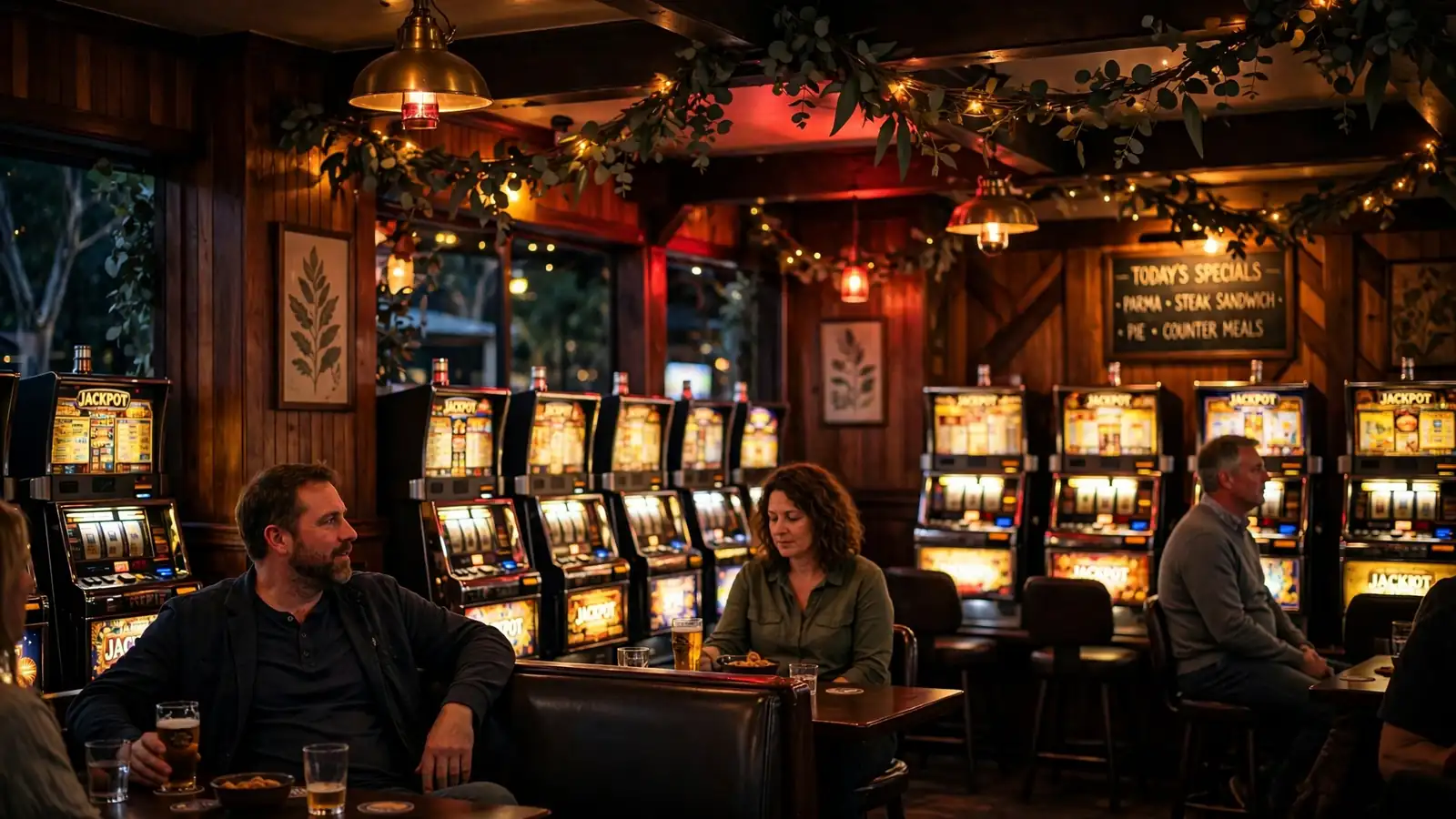
“Best” can mean different things when you are comparing pokies. You might be looking for a particular style of play, a feature you enjoy, or a stated return percentage. Those are not the same measure, and none can tell you what will happen in your next session. A label such as “best paying” is not a promise that a game will pay you, or that one visit to a South Australian venue will produce a better result than another.
Every spin is an independent event determined by a Random Number Generator (RNG). In practical terms, a previous win or losing streak does not make a particular result due next. A machine’s recent history cannot reliably reveal what the next spin will produce. Nor does a string of losses make a win more likely on the next attempt. Treating past outcomes as a forecast can make it easy to spend more while trying to recover money or wait for a result that is not owed.
If you’re looking for pokies options to consider in South Australia in 2026, this list gives you a concise starting point. Check the details that matter to you before choosing where to play.
SpinsUp
SpinsUp lists a Curaçao Gaming Control Board license, OGL/2023/174/0082, held by Dama N.V. That licensing detail is the main stated point to consider.
WinSpirit Casino
WinSpirit Casino lists a Curaçao eGaming license, OGL/2024/923/0383, held by Antillephone N.V. Its stated minimum deposit is A$30.
LuckyVibe
LuckyVibe lists a Curaçao Gaming Control Board license, OGL/2023/176/0095, held by Hollycorn N.V. This licensing information is the stated detail available for your consideration.
GoldenCrown
GoldenCrown lists a Curaçao Gaming Control Board license, OGL/2023/176/0095, held by Hollycorn N.V. Its listed license is the main stated point to weigh.
MrPacho
MrPacho lists crypto payouts at 30–120 minutes and fiat payouts at 24–72 hours. The stated minimum deposit is A$30.
Ricky Casino
Ricky Casino lists crypto payouts in under 1 hour and PayID payouts in 1–3 business days. Its minimum deposit is A$20, or A$30 to qualify for the bonus.
Golden Pokies
Golden Pokies lists a Curaçao license. No other operator details are provided here, so that is the main stated point for you to consider.
Wild Tokyo
Wild Tokyo lists a Curaçao license, crypto payouts at 30–60 minutes, and fiat payouts at 1–5 days. Its stated minimum deposit is A$10.
Bizzo Casino
Bizzo Casino lists a Curaçao Gaming Control Board license, with TechSolutions Group N.V. named in the licensing information. That is the stated detail available for your consideration.
DragonSlots Casino
DragonSlots Casino lists a Curaçao Gaming Authority license, with Jumpman Gaming Ltd named in the licensing information. The license is the main stated detail to consider.
This is why claims about a “hot” machine or a pokie that is “due” should be treated cautiously. They may describe someone’s impression or a short run of results, but they do not change the independent nature of the next spin. A game may produce wins and losses in varying sequences; that variation is not evidence that a machine has remembered what happened before.
Return to player, or RTP, is another measure that needs context. It describes a theoretical return associated with a game setting, not an amount you can expect to get back during a particular visit. It cannot predict whether you will win, how long a session will last, or how much you might lose before stopping. A higher stated RTP does not remove chance from play or turn a game into a reliable way to make money.
There is also a detail that can make comparisons less straightforward: a specialist review reports that some providers allow casinos to choose between multiple RTP settings for the same pokie. If that applies, the game title alone does not establish which return setting is in use at a particular casino. Two venues could offer the same named game while its configured return differs. That is a reason to look for information about the actual setting, rather than assume that a figure attached to the game name applies everywhere.
Even when you find a stated return, check what it refers to and whether it is clearly tied to the version and setting available at the venue. A figure without that context may not help you compare like with like. If the setting is not disclosed, you cannot safely infer it from the title, artwork, or popularity of the game. And a published theoretical return remains a description of the game’s design, not a personal forecast.
So what can “best pokies in South Australia” usefully mean? It can be a starting point for deciding what information you want before choosing to play: whether the rules are understandable, whether the features suit your preferences, and whether the game’s return information is available with enough context to assess it. These are questions about the game, not guarantees of an outcome. There is no single title that can be identified here as the best-paying choice for every player or every South Australian venue.
Popularity is not proof of better returns either. A game that attracts attention may do so because of its theme, sound, bonus features, or visibility. Those qualities do not demonstrate that it has a more favourable setting, and they do not improve the odds of the next spin. Be wary of confident rankings that do not explain what is being compared or how the setting was confirmed.
If you are comparing pokies at a South Australian venue, separate preference from evidence. You can decide that you like a particular style, but that does not establish its likely outcome. You can notice a stated RTP, but it does not predict your session. And you can recognise the same title in more than one place without assuming that its settings match. Keeping those distinctions clear helps prevent a game name, a ranking, or a run of results from sounding more certain than it is.
The useful boundary is simple: game information can help you understand what you are choosing, but it cannot tell you which spin will win. Any decision to play is safer when it is made without treating a “best” label, a reported return, or recent results as a promise of money back.
A venue being open does not necessarily mean its gaming machines are available. When you are checking whether pokies are operating, treat the venue’s general trading hours and its gaming-room hours as separate details. A restaurant, bar or club may be open while a gaming area is not, and machine availability can depend on the venue’s own operating arrangements.
That distinction matters if you are considering going out early or later in the day. A listing that says a venue is open now may refer to its doors, food service or another part of the business, rather than the pokies. Check the venue’s current information for gaming-area hours, and contact it directly if the details are unclear. Opening hours can change, so an old listing or a general map result is not confirmation that machines are operating at the time you plan to visit.
The same care applies to claims about South Australian pokies being open early or being available at a particular hour. Do not assume that one venue’s schedule applies across the state, or that a venue’s published opening time also marks the start of machine operation. If you are already there, staff can clarify whether the gaming area is open and whether any temporary closure or operating condition applies. This is a practical check, not a way to predict what a machine will pay.
There is also a difference between checking whether machines are available and checking what safeguards should be in place while they are running. A report published by regionriverina.com.au describes a requirement that, from 1 July, venues with more than 20 gaming machines have a dedicated responsible gambling officer (RGO) on duty while those machines are operating.
The wording ties the officer’s duty to machine operation, not simply to whether the broader venue is open. If the machines are not operating, that particular condition, as reported, is not triggered by their operation. If they are operating at a venue above the stated machine threshold, the reported requirement is for a dedicated RGO to be on duty. It is reasonable to ask staff who the RGO is if you need help or have a concern about gambling harm.
The report also describes a one-month grace period for venues to remove signage and introduce responsible gambling officers. That allowance relates to putting the changes into effect; it should not be read as a promise that every venue will have completed the transition on the same day. If you are trying to understand what is in place at a particular venue, ask about its current arrangements rather than relying on a general statement about opening hours.
A further measure described in the report is a gambling incident register. It is intended to record occurrences, including situations where a patron’s behaviour indicates that they may be at risk of, or affected by, gambling harm. The register is about recording relevant incidents; its existence does not tell you whether a venue is open, nor does it mean that a concern should be left unspoken. If you need assistance, you can approach staff or the RGO while machines are operating.
A machine being switched on, a gaming room being open, or staff being present does not provide evidence about the payout percentage of a particular pokie. Those are separate questions. Do not use a venue’s operating hours, a busy room, or another patron’s experience as a measure of what you might receive. If you want to understand a game’s settings, that information needs to relate to the specific game and venue, not to the time of day.
Before setting out, look for the venue’s current gaming-area information and confirm it if the timing matters. Once there, distinguish between the venue being open and the machines actually operating. If a responsible gambling officer is required while machines are running, their presence is a safeguard connected to those operating conditions—not a guarantee of an outcome or a reason to stay longer than you intended.
If you are travelling through South Australia and want to visit a venue with pokies, the useful first step is to pin down the place you mean. “Near the airport” can refer to a different starting point from the CBD, and a result labelled “near me” depends on your current location. A broad search may surface places that are not convenient for your actual trip.
Start with the airport, suburb or CBD area where you will be, then check the venue’s own current address and directions. Confirm that the listing refers to a physical venue with pokies, rather than an unrelated business or an online service. Names and map pins can be ambiguous, so compare the address shown in more than one place before setting off.
Distance alone is not enough to plan a visit. Consider how you will get there, whether you need to return to the airport or accommodation, and what transport will be available for the return trip. If you are relying on public transport, check the route and any service changes directly with the transport provider. If you plan to drive, decide in advance how you will get home safely; do not drive if you have been drinking or are not fit to drive.
The same care helps when you are looking around a central area. A venue described as being in or near a CBD may still be some distance from your hotel, meeting point or station. Check the exact entrance and address, not just a general area label. If you are meeting someone, agree on a specific public location rather than relying on a vague description such as “near the centre”.
Regional place names can also be easy to confuse. South Australia and Victoria are separate states, and a result for a similarly named town in another state may not be relevant to your plans. Parkes, for instance, is a place name that can lead to results outside South Australia. Check the state and full address before travelling, especially when a map result appears to match only part of the place name.
For airport travel, leave room for the rest of your journey. A venue stop can affect check-in, transfers or plans with other travellers. Keep your transport arrangements independent of any expectation about how long you might stay, and make sure you can leave when you intend to. If you are travelling with family or friends, be clear about where you are going and when you expect to reconnect.
A practical plan is simple: confirm the physical address, check directions from your actual starting point, and arrange a safe way back. Do not treat a phrase such as “near the airport” or “near the CBD” as proof that a venue is close to you. The right location depends on where you are starting and where you need to go next.
Pokies outcomes are not a reason to extend a trip or change your transport plans. Decide beforehand how much time and money you are comfortable spending, and keep your return journey separate from what happens while you are there. If the venue is not where you expected, pause and verify the address rather than heading to an uncertain location.
An online casino may appear to offer real-money pokies to people in South Australia, but that does not make the service lawful for the operator or locally regulated. The Interactive Gambling Act 2001 prohibits companies from providing real-money online casino games to people in Australia without a domestic licence, and no Australian online casino licences have been issued. There is no Australian-licensed online casino.
That distinction matters when you see claims about real-money play, high betting limits or a “no deposit” offer. A promotion does not change the legal position, and a large maximum bet says nothing about whether a game pays well. Treat claims about winnings and offers cautiously; do not take them as evidence that a site is authorised or that you will be able to withdraw money.
The law targets operators rather than individual players. Even so, using an offshore service carries a practical risk that deserves attention: if the casino refuses to pay your winnings, you have no legal recourse in Australia. A deposit can therefore be difficult to recover, and a displayed balance is not the same as money you can reliably access.
Read the payment and withdrawal terms before sending money. Check which payment methods the operator accepts, whether the same method can be used for withdrawals, and what conditions apply to a cash-out. If those terms are unclear, or you cannot establish how a withdrawal request is handled, do not assume that depositing will resolve the uncertainty.
“No deposit” does not mean “no conditions.” An offer may still have rules attached to any winnings, so read the full terms rather than relying on the headline. If the conditions are difficult to understand, you cannot make a sound decision about whether the offer is worth accepting. Do not deposit simply to unlock an advertised benefit.
Deposits and withdrawals are separate decisions. Before making a deposit, consider whether you can afford to lose that money. Before trying to withdraw, be prepared for identity checks: a specialist review reports that an operator may request identity documents and proof of address before a first withdrawal, and may also ask for a selfie holding your ID. Check what documents are required and whether the details on your account match them before depositing. Do not send documents through a channel you cannot verify as belonging to the operator.
A payment option does not establish that an online casino is licensed, fair or transparent. Nor does a successful deposit prove that a later withdrawal will be approved. Keep records of transactions and correspondence, but do not mistake record-keeping for a guarantee of recovery.
If you have already deposited and a withdrawal is refused, avoid sending more money on the assumption that another payment will release your balance. The lack of Australian legal recourse against an offshore casino is a significant risk, not a minor inconvenience. A cautious choice is to avoid putting money into a service when its legal status, payment terms or withdrawal requirements are not clear.
A venue can be a better fit for you without being objectively “the best”. Before deciding where to play, compare information that affects your visit and your ability to make an informed choice: what the venue says about its gaming area, what support is available if gambling stops feeling manageable, and whether staff can explain the safeguards in place. Treat promotional language as a claim to check, not evidence that a venue suits you.
Ask who you can speak to if you want help taking a break or need information about responsible gambling support. A useful answer should identify a clear point of contact and explain how staff respond when someone appears distressed or at risk of gambling harm. You can also check whether the venue describes ways to set limits or seek assistance, rather than relying on general assurances that it takes safety seriously.
A report by regionriverina.com.au describes a requirement beginning on 1 July for venues above the stated machine threshold to have a dedicated responsible gambling officer (RGO) present while their machines are operating. The report also describes an incident register for recording events, including situations where a patron’s behaviour suggests they may be at risk of, or experiencing, gambling harm. If a venue is covered, you can ask how to contact its RGO and how concerns are recorded and followed up.
Look for information that is specific enough to verify. If a venue describes a safeguard, ask what it means in practice and who is responsible for it. If its public information does not answer a straightforward question, contact the venue before making a choice. A clear response is more useful than a broad claim about being a safe or responsible place to play.
For comparisons among South Australian venues, separate venue facts from personal preference. The availability of support, clarity about safeguards and the way staff answer questions are things you can assess directly. A description of a venue as popular or welcoming does not establish that its machines offer better results, and no venue can remove the randomness of play.
Keep your decision focused on what you can confirm, rather than assuming that a venue’s size, reputation or marketing tells you how it handles gambling harm. If you are uncertain about a claimed rule, seek an explanation from the venue or the appropriate South Australian authority before relying on it.
A listing that describes a venue as open late, or around the clock, is not enough to establish that its pokies are available at the time you plan to go. The wording may refer to the venue generally, rather than the gaming area, and online listings can be out of date. Treat “24-hour pokies” as a reason to check, not as confirmation of continuous access.
Before setting out, look for current information published by the venue itself. Check whether it states when the gaming area operates, not only when the broader venue is open. If the information is unclear, contact the venue and ask whether pokies will be operating at your intended arrival time. A clear answer is more useful than relying on a search result or an old listing.
“Open now” can also be misleading. It depends on when you check, and a venue’s status may change after that. A map listing or directory entry may show general opening information without confirming the status of the gaming area. Check the date of any update and whether the details apply to the part of the venue you want to visit.
For late-night plans, allow for the possibility that the information you find does not settle the question. A venue may have separate hours for different areas, or its published details may not explain whether pokies are operating throughout its stated opening period. Do not assume that a late closing time means machines remain available until then.
If your plans depend on a particular time, verify close to your visit and keep the venue’s contact details handy. If you cannot confirm that pokies will be operating, avoid treating the trip as certain. This is especially important when you are travelling specifically to play rather than visiting for another reason.
The same check applies whether you are looking for late-night access or expecting a venue to operate continuously. A phrase in a listing cannot confirm current conditions, and one venue’s information does not establish the hours of another. Use current, venue-specific details before making plans, and distinguish the opening of the venue from the availability of its gaming area.
A reference to Crown in a South Australian pokies search does not, by itself, establish that a Crown venue or Crown pokies are available in the state. A brand name can appear in pages about other places, in general casino coverage, or in material that does not confirm a local venue. Treat the name as something to verify, not as proof of a South Australian option.
The same caution applies when you are looking for a “best” pokies room. That phrase expresses a preference, not a confirmed ranking. Without reliable information identifying the venue and its gaming facilities, a list or recommendation could give you the wrong impression. Before relying on a branded result, look for the venue’s exact name, its South Australian address and a current statement from the venue itself. If those details do not agree, do not assume the listing describes a local place to play.
A Crown-related page may also leave important questions unanswered. It might not say whether the named venue is in South Australia, whether it has pokies, or whether the information is current. A photo, logo or mention of a brand cannot settle those points. Check the location and the specific facility being described rather than inferring availability from the branding.
If you are comparing rooms, separate the question of who operates a venue from what it offers. A brand label does not tell you which games are present, how the room is arranged or what safeguards apply. Those details need to be confirmed for the particular South Australian venue, not borrowed from a page about a different location.
The maximum cash payout question also needs a venue- and machine-specific answer. Do not assume that a figure shown in a general article, a discussion about another casino or a branded page applies to a South Australian pokie. Ask the venue for the applicable payout information and read the rules for the particular machine before playing. If you cannot establish which venue or machine the information covers, the figure is not a sound basis for deciding where to play.
A careful check is especially worthwhile when a result combines a familiar casino name with a South Australian location. Confirm that the venue is actually identified as being in the state, then verify the details directly with that venue. If the location or facilities remain unclear, keep looking rather than treating the brand as confirmation.
If you are comparing clubs in Adelaide’s CBD or elsewhere in South Australia, the number of machines or a venue’s name cannot tell you how its gaming area is managed. A more useful detail to notice is how the venue separates gaming information from payment points. Signage can affect whether people are directed towards a gaming area or an ATM while already close to machines.
A venue should not display signs directing patrons to gaming lounges within eyeshot of an ATM or EFTPOS terminal. The reverse also applies: signs directing people to ATMs should not be visible from gaming machines. These restrictions are intended to limit prompts that connect access to cash with the decision to keep playing. When you are inside a club, notice where signs are placed in relation to machines and payment facilities; a sign’s wording is only part of the picture.
This is not a way to rank clubs or identify a “best” venue. A polished entrance, a prominent sign or a large gaming area does not establish that a venue is suitable for you. Nor does a search result listing a club prove what facilities it currently has. Avoid treating promotional descriptions as a substitute for seeing how the space is arranged.
Staff support is another relevant safeguard. A report published by regionriverina.com.au describes a requirement from 1 July for venues with more than 20 gaming machines to have a dedicated responsible gambling officer (RGO) on duty while those machines are operating. That is a specific staffing condition, not a claim that every club has the same number of machines or the same arrangements. If you want to understand what support is available at a particular venue, ask staff how to contact the RGO.
If you are considering self-exclusion, signage is not the same as arranging that protection. Ask the venue directly about its process and what it covers before relying on it. Clear information about gaming-area signs, payment points and staff support gives you a more grounded basis for deciding whether to enter or stay, without assuming that a CBD location or a club label tells you enough.
PayID is a way to address a bank transfer using an alias rather than entering account details. The alias can be an email address, mobile number or Australian Business Number (ABN). The transfer itself moves through Australia’s New Payments Platform (NPP), a system supported by all major banks and protected with end-to-end encryption.
That describes the payment infrastructure, not the business receiving money. Seeing PayID offered on a website does not establish that the site is licensed to provide gambling, that its games are fair or that its published return-to-player (RTP) settings are accurate. A payment method cannot verify any of those claims.
This distinction matters when cashless payment information appears alongside claims about pokies. PayID’s presence does not turn an online casino into an Australian-licensed service or make real-money online pokies lawful for an operator to offer to people in Australia. There is no Australian-licensed online casino. The Interactive Gambling Act 2001 prohibits operators from providing real-money online casino games to people in Australia; the law targets operators, not individual players. Offshore sites may still accept Australians, but a player has no legal recourse in Australia if one refuses to pay winnings.
For a physical venue, a reference to cashless payments also needs to be read in context. PayID is a bank-transfer mechanism; its existence alone does not tell you whether a particular venue accepts it, how a transaction would be handled, or what safeguards apply. Check the venue’s own current payment information rather than treating a general description of PayID as confirmation.
If you see PayID presented as proof of trustworthiness, separate the claim from the mechanism. It can identify where a transfer is addressed within the NPP. It cannot certify the recipient, the gambling service or the outcome of a game. A familiar payment label is not a substitute for checking what is being offered and the risks attached to it.
You must be at least 18 to gamble in Australia, including on pokies. If you are under 18, you cannot legally use a gaming area or take part in gambling. Age is a firm boundary, not something that changes with a venue’s policy.
If you are old enough to play, decide your boundaries before you arrive. Deposit limits, loss limits and session time limits can help keep spending and time within a plan. Choose limits you can afford to stick to, and do not raise them in the moment to recover losses or extend a session. A limit is useful only if you treat it as a stopping point.
Self-exclusion is another standard responsible-gambling tool. It can help if you want to prevent yourself from gambling for a period or need more distance than a personal limit provides. Ask the venue what self-exclusion options it offers and how to put one in place; do not assume the process is identical everywhere.
BetStop has a narrower scope: it applies to Australian-licensed operators and does not bind offshore sites. It should not be treated as a way to exclude yourself from every gambling service or venue. For help at a physical venue, ask staff about the venue’s own self-exclusion arrangements.
Notice when your plan is no longer working. If you feel pressure to keep playing, borrow money, or hide your gambling, stepping away and speaking with someone you trust can be a practical first move. You do not need to wait until the consequences feel severe before using limits or asking for support. The point is not to prove that you can control every outcome; it is to protect your time and money by deciding in advance when to stop.
There is no Australian-licensed online casino. If you play at an offshore casino, you have no legal recourse in Australia if it refuses to pay your winnings.
You must be at least 18 years old to gamble online in Australia.
Australian players can legally play at offshore sites that accept them, but offering real-money online pokies to Australians without a domestic licence is illegal for operators. No domestic licences have been issued.
E-wallets such as Skrill and Neteller are popular for their speed. Check the casino’s withdrawal terms before depositing.
Yes, PayID is treated like any other qualifying deposit method at the sites mentioned. Check the bonus terms, including wagering requirements, before accepting an offer.